honzen plush toy


Pros and Cons of Reversible Octopus Plush: Longevity Test Results
Views:112
Update time:2026-07-01
Pros and Cons of Reversible Octopus Plush: Longevity Test Results
Reversible octopus plush toys have blown up online over the past two years. You can spot them everywhere: short-video live streams, social media feeds and friends’ desks. One side shows a sad, glum facial expression, and flipping it reveals a cheerful, comforting smile. Designed for instant mood switching, it perfectly mirrors young people’s unpredictable moods and works wonders for stress relief. I hopped on the trend and bought both budget versions and premium well-crafted ones. I tested them for months with regular squeezing, rough handling and washing trials, getting a full grasp of this viral toy’s real performance.
Most people only notice how cute and calming these octopuses are, unaware that most cheap mass-produced ones break down quickly, suffering from ripped seams, shape distortion and stuffing collapse soon after use. Today I’ll give an unbiased breakdown based on hands-on testing, covering its core strengths, drawbacks and the highly questioned durability, helping you avoid impulsive purchases and wasted cash.
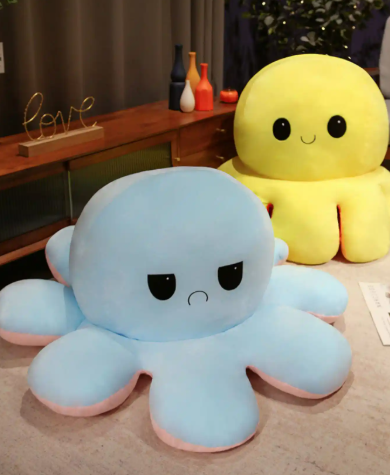
Let’s start with its biggest selling points, the exact reasons it went viral nationwide. First comes its one-of-a-kind mood-relief function, unmatched by regular plush dolls. When stressed from work, upset over arguments with friends or simply bored, flipping it instantly switches its mood from gloomy to cheerful. This tiny simple movement feels incredibly soothing. It’s an affordable little tool to ease negative emotions, great for personal use or desktop decor.
Second, it boasts versatile styling and high practicality. Most reversible octopuses are compact and space-saving, fitting nicely on desks, nightstands or backpacks. Its minimalist design complements any room decor and boosts ambient vibe. With zero sharp edges and ultra-soft fabric, it stands up to constant squeezing, twisting and kneading. It works for adult stress relief and gentle play for kids, appealing to a wide audience.
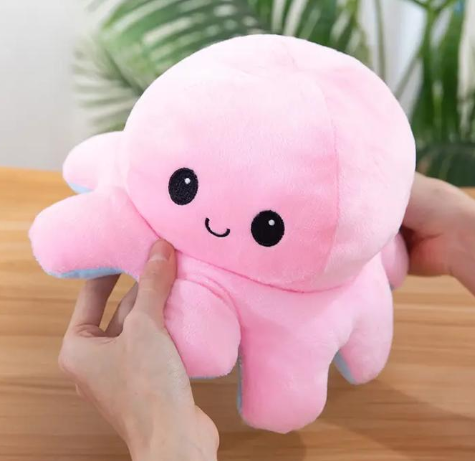
A third practical upside: high-quality versions have an incredibly smooth texture. Well-made pieces use short-pile fabric that’s sleek and non-irritating, packed with even full stuffing for bouncy, springy tactile feedback. Squeezing it after long hours sitting relieves stiff hands with obvious calming effects, keeping it a top pick among trending plush toys long-term.
Now for the downsides I found through testing, flaws sellers never mention openly, especially major durability issues. The top universal flaw is fraying at the flip opening, an inherent structural limitation of its design. Standard plush toys are fully sealed and sturdy, but reversible octopuses need an opening to flip inside out, which cannot be reinforced with multiple rows of locking stitches.
The budget model I tested started fraying lightly around the seam after roughly twenty days of frequent flipping, with loose threads sticking out. Continued use widens the gap, letting inner stuffing spill out. Even upgraded premium styles hold up better but still develop loose stitching after repeated heavy twisting and flipping, just lasting longer than cheap alternatives. This flaw stems from its unique structure and can never be fully fixed.
The second critical flaw is inconsistent durability tiers, with cheap variants prone to flattening and misshaping. Cheap viral options priced under twenty yuan cut costs by using lightweight shredded filling with insufficient low-density stuffing. They look round and fluffy out of the box, yet constant flipping and squeezing shifts and compresses inner cotton, creating uneven lumps and hollow spots that ruin its original cute rounded shape entirely.
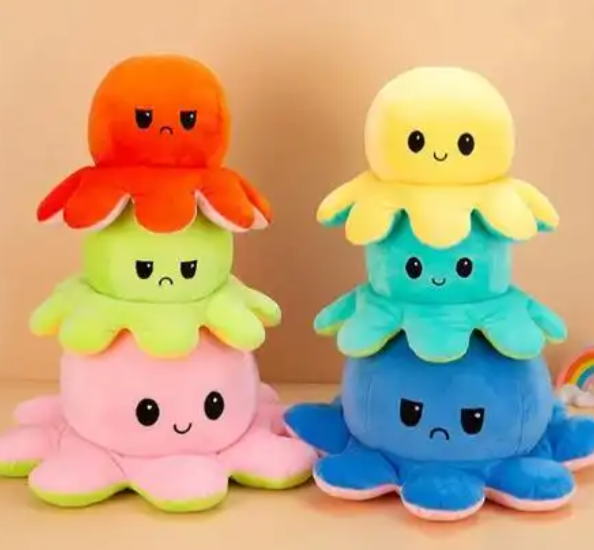
These low-cost octopuses also use thin sparse short-pile fabric with terrible wear resistance. Daily friction against desks causes pilling and lint shedding quickly, turning the fabric stiff and rough over time. My budget octopus lost its fluffy sheen in one month, becoming scratchy to touch and unusable, ending up discarded.
A third overlooked downside is very low tolerance for machine washing. Most people wash plush toys freely, yet reversible octopuses cannot stand frequent cleaning. The unsealed flip seam lets water seep deep into stuffing, which takes forever to dry fully, leading to stale odors and mold growth. Washing also loosens stitching around the opening, speeding up tearing, clumping and deformation. My cheap test piece collapsed permanently after one wash and could never recover its shape.
Final test summary for real durability plus buying and care tips. Premium well-sewn reversible octopuses can stay intact for six months to one year with gentle play, minimal washing and no rough tugging, retaining shape and softness well. Uncertified cheap bestsellers only last twenty to thirty days on average, almost always developing rips, deformation and pilling, making them poor value for money.
If you love the stress-relief effect of this octopus plush, go ahead and buy one but skip ultra-cheap unbranded knockoffs. Budget picks work fine for occasional casual play and short-term novelty. For long-term display and daily frequent use, pick premium styles with tight stitching, full dense stuffing and reinforced flip seams. Wash as rarely as possible; wipe light stains with wet wipes to greatly extend service life.
Overall, the reversible octopus plush has clear pros and cons. It’s calming, adorable and stylish, yet its special construction limits durability compared to standard dolls. Recognize its actual strengths, weaknesses and durability limits before buying rationally to avoid traps and unnecessary waste.
Related News
Read More >>
 Exclusive Design Models, Plush Toys Reject One-Size-Fits-All
2026-07-21
Exclusive Design Models, Plush Toys Reject One-Size-Fits-All
In the pl
 Winter Soft Treasure, Plush Toys Warm Every Moment
2026-07-17
Winter Soft Treasure, Plush Toys Warm Every Moment
The romance of wint
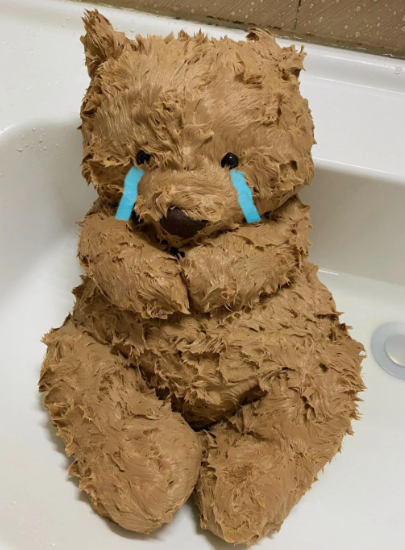 Long-pile plush toys trap dirt easily – Practical cleaning hacks for moms Every parent of young kids knows exactly how it is.
2026-07-14
Long-pile plush toys trap dirt easily – Practical cleaning hacks for m
 Frequent Failures in Smart Talking Plush Toys? Insider Guide on Sound Module Selection & Pitfall Avoidance
2026-07-13
were normal wear and tear. After testing over a dozen plush toys at di